How Personalized Learning Plans Support Children With Learning Difficulties
Does your child study for hours but still struggle to keep up in class? Many parents in Kasaragod and across Kerala watch their children try hard, only to feel lost, anxious, or left behind. This is often not a sign of low ability. It is a sign that the child needs a different kind of support. A personalized learning plan gives every child a learning path built around their own strengths, pace, and needs. Instead of forcing a child to fit one method, a personalized learning plan adjusts teaching to fit the child. At First Learn, we build these plans to help children rebuild confidence, reduce learning anxiety, and grow both academically and emotionally.
What Are Personalized Learning Plans?
A personalized learning plan is a customized educational strategy built around one child’s academic, emotional, behavioral, and developmental needs, using individualized instruction and skill-based progress tracking instead of a fixed curriculum.
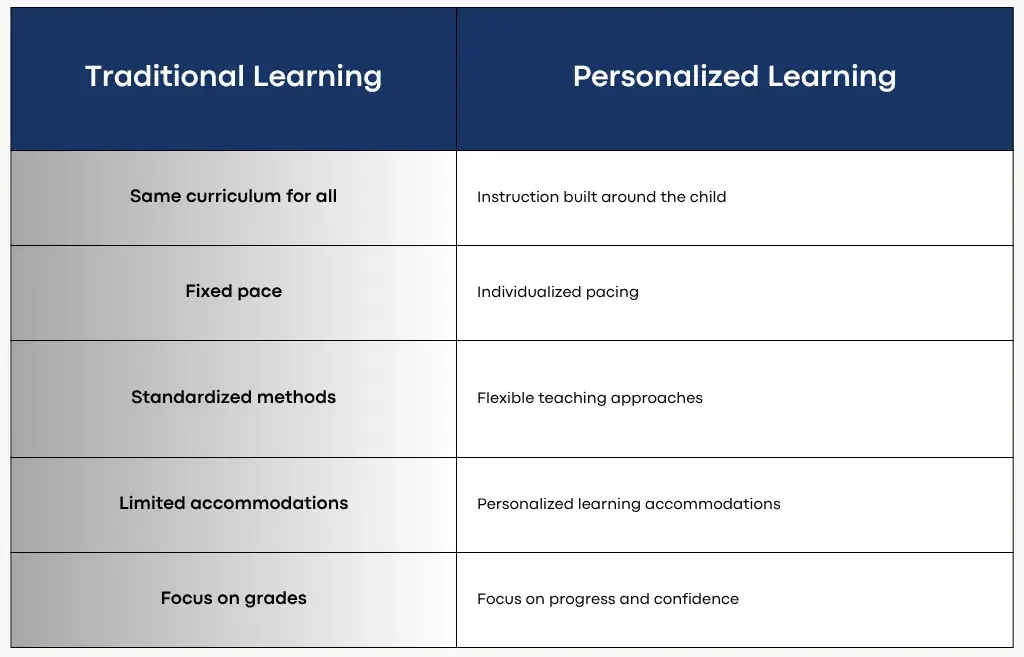
First Learn builds each individual learning plan through one-to-one sessions, multisensory learning methods, parent collaboration, and regular progress monitoring, with emotional confidence building running alongside the academics. Globally, some schools rely on individual education plans under formal IEP special education systems; India rarely runs IEPs at that scale, so centers like First Learn deliver similar tailored support through remedial programs and collaborative guidance instead.
Which Children Benefit Most From Personalized Learning Plans?
Learning struggles rarely look the same from child to child. Children respond to learning difficulties in very different ways. Some become frustrated and restless, some grow unusually quiet, and others begin to believe they’re simply not capable of learning.
- Attention and focus difficulties – Children with attention and focus difficulties often find it challenging to stay engaged for long periods. Breaking lessons into small, achievable steps and using visual schedules can make learning feel more manageable and less overwhelming.
- Dyslexia and reading challenges – a 2022 meta-analysis in the Indian Journal of Psychiatric Nursing found learning disability affects 10.7 percent of Indian schoolchildren, dyslexia among the most common. Phonics-based, multisensory instruction rebuilds reading confidence.
- Speech, language, and auditory processing difficulties – listening comprehension strategies support children who lose the thread of spoken instruction.
- Emotional and behavioral challenges – school anxiety and fear of mistakes often surface as disruption or silence, not obvious academic trouble.
Why Personalized Learning Support Matters
Learning accommodations like extra response time, visual aids, simplified instructions, and movement breaks turn an overwhelming school day into a workable one. Beyond the classroom, remedial education and strengths-based instruction pick up where regular teaching time runs short. Emotional wellbeing sits right beside academics here: celebrating small wins and reducing fear around schoolwork rebuilds self-esteem step by step, and John Hattie’s 2009 review of education research found individualized instruction has a measurable positive effect on achievement (Cohen’s d = +0.23). Parent involvement keeps that progress moving between sessions, and regular progress monitoring – reading skill, attention, participation, communication – replaces guesswork with real data.
Signs a Child May Need Individualized Learning Support
- Struggling despite consistent effort
- Trouble staying focused or finishing tasks
- Delays in reading, writing, or memory
- Frustration or avoidance around schoolwork
- Difficulty with communication or social interaction
At First Learn, early intervention and individualized support strategies are built to help a child feel confident and capable again.
Key Benefits in Special Education Support
Improved comprehension and task completion, stronger engagement instead of shutting down, growing independence with less fear of failure, calmer behavior around homework, and tighter teamwork between parents, teachers, and specialists – For many families, these are the first signs that a personalized approach to learning is making a real difference.
How Parents Can Seek Professional Learning Support
- Identify academic, behavioral, or emotional concerns at home or school
- Talk with teachers and learning specialists about classroom observations
- Book a professional learning assessment through a center like First Learn
- Build a customized intervention plan with clear goals and accommodations
- Review progress regularly and adapt strategies as the child grows
Challenges Families and Schools Face
Learning difficulties often get noticed late, sometimes years after a teacher’s first passing comment, and specialized support is hard to find outside a handful of cities. Regular classrooms rarely have time for one-to-one attention when a teacher is managing forty other students at once. Social stigma still makes some families hesitate to seek help, worried about comparison with peers or a label that follows a child around school. Balancing academic pressure with a child’s emotional health is never simple, and most parents are figuring it out for the first time with no roadmap to follow.
Best Practices for an Effective Learning Plan
Set measurable goals, review progress on a fixed schedule, involve parents at every stage, offer real accommodations, stay flexible when a method stops working, protect emotional wellbeing, and watch classroom participation, not just test scores. This is the same intervention philosophy First Learn follows with every individual learning plan.
Real Stories: Building Confidence, One Step at a Time
Every child’s learning journey is unique, but one thing remains constant-the right support can make a lasting difference.
At First Learn, many children who once avoided reading gradually become confident enough to read aloud after receiving personalized, one-to-one support. Others who struggled to stay focused during lessons often show noticeable improvements through structured routines, individualized strategies, and consistent guidance. Parents also tell us that children who once feared tests begin participating more confidently in class as their learning skills and self-belief grow.
To protect our families’ privacy, these experiences are shared without identifying details. They reflect the kind of steady progress many children achieve with early intervention, personalized learning plans, and ongoing support.
Frequently Asked Questions
1. How can parents identify learning difficulties early?
Watch for effort without progress, trouble focusing, reading or writing that lags behind, or dread around homework time. If it keeps happening for weeks, that’s your cue to talk to a teacher or learning specialist, not wait it out.
2. Why does my child forget everything after studying?
Some children struggle with memory, attention, or information processing, making it difficult to retain what they’ve learned. First Learn uses personalized teaching strategies and regular practice to improve understanding, memory, and long-term learning.
3. My child studies a lot but still gets low marks. Why?
Low marks don’t always mean a child isn’t trying. Sometimes they need a different way of learning rather than more study time. At First Learn, our specialists identify learning gaps and provide one-to-one remedial support to help children build strong academic skills and confidence.
4. How do I know if my child has a learning difficulty?
Signs may include struggling with reading or writing, taking a long time to finish homework, forgetting lessons, avoiding schoolwork, or getting low marks despite putting in effort. If these problems continue, it’s a good idea to seek professional guidance.
5. How does a personalized learning plan help children?
Personalized learning plan helps children by teaching them at their own pace and in a way that suits their learning style. It can improve understanding, attention, confidence, and overall school performance while reducing frustration and stress around learning.
Contact Us
Book a Consultation with Mahin Unais
Whether you’re a concerned parent or educator, we’re here to guide you. Schedule a session to discuss your child’s learning needs and explore how we can help them thrive.
Get in Touch
3rd Floor, Square Nine Mall, New Bus Stand, Big Bazar, Kasaragod, Kerala 671121
+91 95264 10045
firstlearnclinic@gmail.com
Send Us a Message
First Learn is a leading special education clinic in Kasaragod, offering special education, remedial therapy and learning disability support through personalised one-to-one sessions for children, teens and adults.
© 2026 First Learn Learning Clinic. All rights reserved.